Today is my granddad’s birthday. If he were still alive, he would be 96 years old.
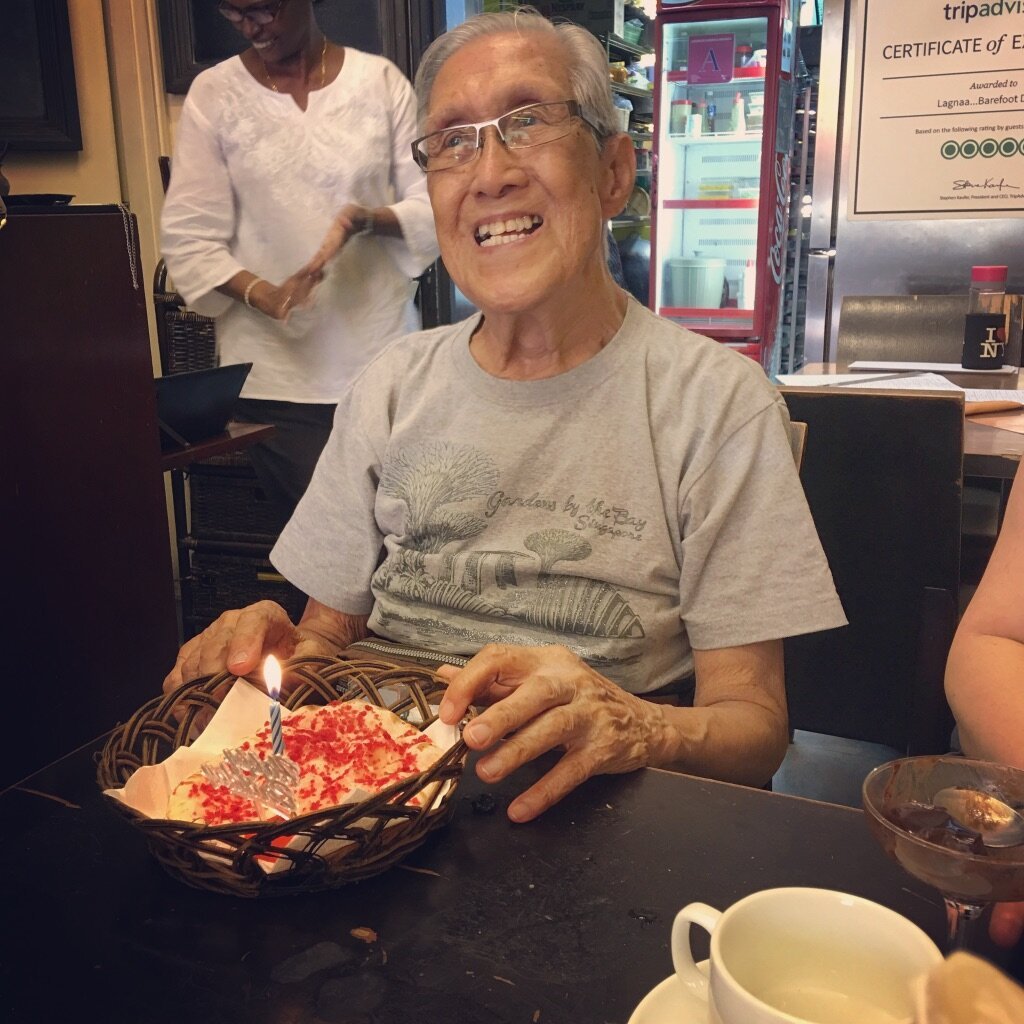
On this day five years ago, we took him to his favourite restaurant in Little India. He used to go there by himself, but reduced his visits as his legs grew weaker and it became harder to walk from the bus stop—he would never take a taxi—under the tropical sun. When we brought him through the door, the restaurant staff welcomed him like a returning hero. They gave him a sweet naan with a candle on it in place of a birthday cake.
Last year, there was no birthday meal. He was in the nursing home, and Covid-19 restrictions meant we couldn’t gather or even bring him food. My mother visited him briefly, bringing him news from “outside”. She gave him a card that I’d written for him, an untidy scrawl of big capital letters to accommodate his failing eyesight. He kept this card, as well as all the other letters and messages my mother had written for him throughout his time in the nursing home, in a metal box by his bed.
After his death we discovered that the nursing home had celebrated his 95th birthday; in the metal box that has now come to me, I found a photo of him blowing out the candle on a slice of cake, droopy balloons held in his other hand. He was wearing the same T-shirt he wore to his birthday in 2016.

“Tomorrow is Kong Kong’s birthday. Feel like we should do something but don’t know what,” my mum texted me last night. There doesn’t seem much that we can do—we can’t go to his favourite restaurants since dining-in has been banned, and restrictions on social gatherings and visits mean we can’t come together to eat at home, either.
In the absence of other ideas, writing this seems to be the only real thing I can do in a Phase 2 (Heightened Alert) Singapore. By putting words down, I can poke around the squidgy, squishy mess of my emotions, turning feelings in my heart into thoughts that my brain can understand.
Individual grief and collective commemoration
I was mentally prepared for Kong Kong’s death; especially after seeing how he’d deteriorated in the last few weeks of his life. But there was no way to prepare for how I would feel or react. I’d witnessed grief before, lost people I cared about before, but it’d never been so, so close.
My great-grandmother, who lived in Penang, died when I was a little kid. I don’t remember much about her funeral; just flashes of walking through an old shophouse, wearing a white T-shirt, an uncle (but not one who was actually related to me, I think) giving me a red fabric square to pin on my sleeve. I was loudly proclaimed as the 橄欖孫 (ka-na-sun), the great-grandchild, and ushered to the front of the procession. My mother said my presence—proof that my great-grandma had lived long enough to see four generations—was considered a sign of a long and blessed life.
Kong Kong was never one for rituals. He didn’t have the patience. “When I die, just put me in a box and throw me out,” he used to say. It caused lots of frustration for my grandma at the end of his life, when we were wondering what he might want for his funeral. “他说的,没有一句是正经话!(None of what he said can be taken seriously! )” she huffed.
Growing up under my granddad’s influence, I didn’t think much of wakes and funerals, either. When the time came, though, I found the minutiae of funeral arrangements comforting: they gave me direction, a list of things to occupy my mind and body. Things were okay when I was talking to the funeral director, tidying away empty packet drinks and candy wrappers in the memorial hall, changing the candles before the casket.
The three-day wake, too, wasn’t just pointless sitting around. It gave me a reason to put down all the other things that might otherwise have claimed my time and attention. It created an opportunity for me to do nothing but talk to family and friends, often about the one person who was really occupying my thoughts, the one person I really wanted to talk about because I could no longer talk with them. And in those three days, I met more extended relatives than I’d ever had in my life, and was consoled by the knowledge that there were many more connections and many more memories than I’d known about. The wake and the funeral gave us space to turn individual grief into collective commemoration.
Grief literacy
The first thing that I read today was Mona Eltahawy’s essay on grief. She wrote about listening to Vivaldi, reading the poet and activist June Jordan’s essay anthology, Some of Us Did Not Die , and the need for us to become grief literate.
An excerpt:
To make friends with grief, I needed new words. Vivaldi’s music felt like rose petals falling on my heart–soft and fragrant and so welcome. Other times it was like having bees buzz around my mind. Others still, as if a breeze was blowing through a corridor that connected my heart and my mind, leading me to joy. A dizzy joy. A trippy joy. A bold joy.
In my lockdown bubble, I surrendered to the ways the music played in my mind, pulling right and left, knocking on areas hiding, telling me “Beauty is here.”
And in that pull right and left, and in the knocking, the music cajoled and tempted words, laying rose petals for them to follow along the corridor that connected my mind to my heart.
Antonio Lucio Vivaldi (1678–1741), a Baroque composer born in Venice, is best known for a series of violin concertos called The Four Seasons. Unlike Mona, for whom Vivaldi’s music “triggered no memories of anything that I would miss or that compounded loss”, Vivaldi reminds me of Kong Kong. I remember “Spring” from The Four Seasons playing in the promos for Symphony 92.4FM, the only radio station in Singapore dedicated to classical music, which he listened to sometimes on the hi-fi set he had when I was a kid. When I think of Vivaldi, I think of violins, and how my granddad loved them. I don’t remember seeing or hearing him play very much, but I have a memory of Kong Kong just outside the door of my grandparents’ flat, making a violin in a swirl of sawdust.
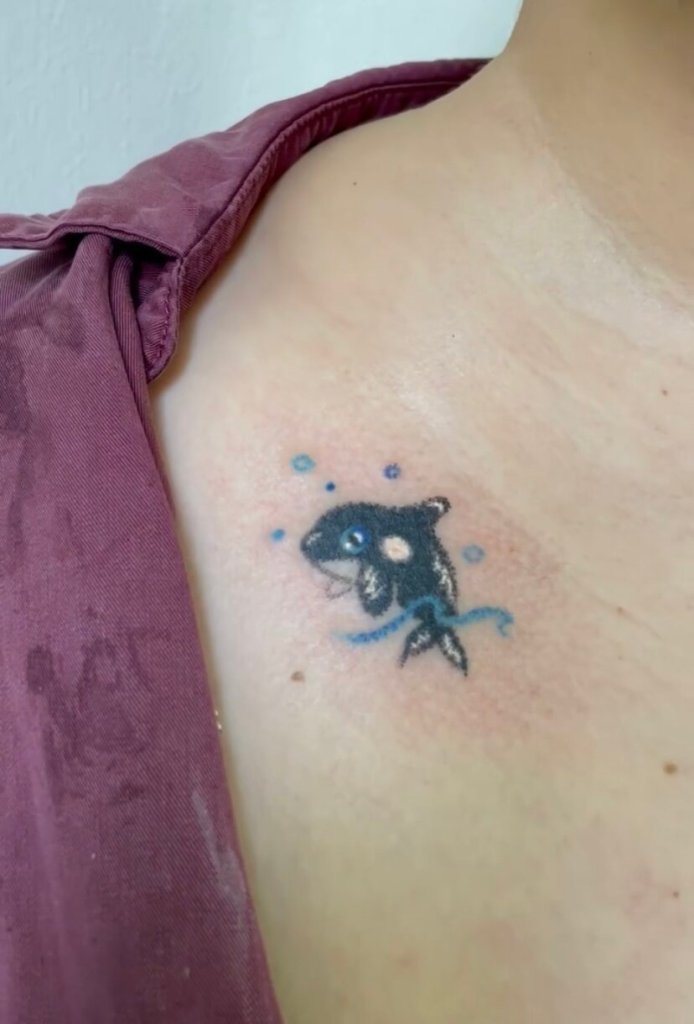
In my grief, I do not seek out blank slates. I look for reminders and connection in everything. I change my phone wallpaper to a photo of the sea where we dropped his ashes. I keep his toy orca on my shelf; it still doesn’t feel close enough, so I get its likeness handpoked into my skin. His metal box of cards and letters and pens and rubber bands sit on the sideboard in the hallway; I don’t know what to do with it, but I will not let it go.
Sometimes, when I’m alone, I sit and look at old photos on my phone. My eyes wander over the lines and curves of my late grandfather’s face. He’s gone, I tell myself as I stare. You’ll never see him, hug him, touch him again. Remember his voice? You’ll never hear it again. I am brutal about what I say to myself; I lay it out as plainly and as directly as I can. I don’t try to soften the blow.
In the early days I wondered if I was being too cruel to myself, why I insisted on rubbing these painful truths in my own face, why I couldn’t just let time take its course. Now, almost a month later, I do it because I don’t want my grief to just sit in the back of my mind, supplanted by daily tasks. I don’t want to forget it or push it aside. I want to feel my grief, to cradle it close, to occasionally hold it up to the light, as I’m doing now.
“Thanks for sharing with us this great big love,” a friend wrote in a Facebook comment under my post about how my granddad named a toy orca after me when we were separated due to Covid-19 regulations.
That’s what I have with my Kong Kong: a great big love. Before, this love contained all our conversations and jokes and expressions of affection; today, this love also contains my grief. I embrace this grief because I’ve come to recognise it as the mirror image of my joy. My grief represents the significance of what I lost; it is the final and only way for me express my love for the one who is no longer here.
Before losing my granddad I was afraid and awkward about speaking with others about their loss, always anxious that I was perhaps poking where I shouldn’t poke. Now I know that such questions and conversations, if approached with compassion and kindness, allow us the space to unpack and share. And grief isn’t about crying and sadness that needs to be hidden away and suffered in private; it’s also a form of healing and connection.
I don’t know if this lesson is enough to make me grief literate. I write this not to teach anyone how to grieve, only to share my own journey… and my great big love.
 Kirsten Han