After cancelled flights, missed flights, and an almost-missing suitcase, I made it to Geneva.
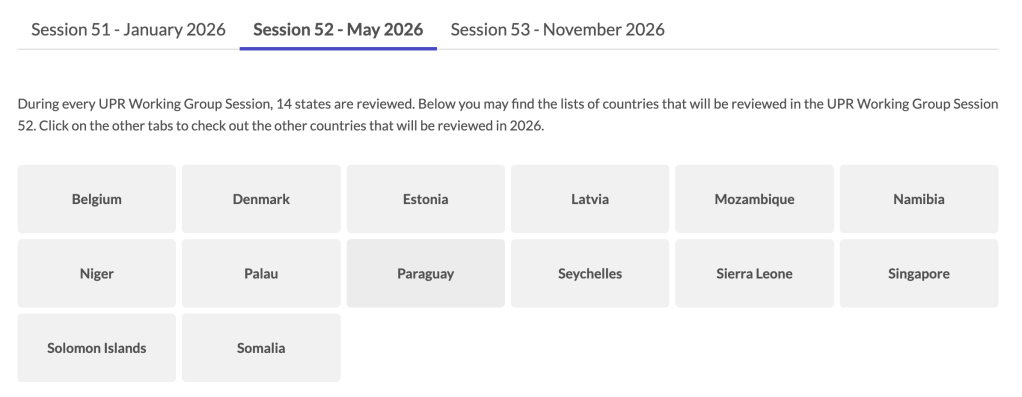
On Monday, I was a panellist at a side event on gender and the death penalty, organised by The Advocates for Human Rights. The event covered some of the countries up for Universal Periodic Review at the next UPR Working Group Session held by the Human Rights Council.
We don’t often talk about gender in the context of the death penalty in Singapore, because women so rarely get sentenced to death in our country. There are, in fact, no women on death row at the moment. The last woman on death row was hanged by the state in October last year.
But this doesn’t mean that the death penalty regime doesn’t have gendered impacts and implications, or that women are largely unaffected by capital punishment in Singapore.
The death penalty is not just about who is on death row. Its impact stretches far beyond prison walls, rippling through families and communities. Death sentences aren’t just imposed upon individual prisoners; the sentence is also inflicted upon all their loved ones, the impact traumatic and long-lasting.
I’ve worked with the families of death row prisoners for about sixteen years now. This is what I’ve seen:
When men end up on death row, it is often women who have to step into the void that’s left.
I first wrote about this 10 years ago. Very little has changed. When the Transformative Justice Collective works with the families of death row prisoners, more often than not we are working with sisters, wives, mothers, nieces. Again and again we see women having to step up to shoulder enormous emotional, mental, and even financial loads—because if they don’t, who will?
I’ve seen sisters having to balance taking care of their own families with meeting their brother’s needs and requests from death row. Sisters who face tremendous pressure and criticism—be it from employers, colleagues, or even members of their own family—for daring to speak up and campaign for their brothers’ lives. Mothers whose poor health gets exacerbated by endless worry for their sons, even as others in their community pull away and shame them for having birthed “criminals”. Wives suddenly thrust not only into the role of breadwinner, but also that of single parent. Nieces carving out time from their busy lives and responsibilities to do their best for uncles languishing in miserable concrete cells, the fear of the gallows never that far away.
It is painful, painstaking labour. Yet I have seen women take it on with courage, conviction, and tremendous amounts of love. Still, they shouldn’t have to. No one should be put through such brutality. Regardless of what their brothers, sons, or husbands have done, the death penalty is a choice we make. We are the ones putting these women through this.
By abolishing the death penalty and shifting towards approaches rooted in principles of harm reduction and transformative justice, we do not only save the lives of men on death row. We save entire families: the women, the children, the elderly. And we let ourselves reach towards a gentler, more just future—so that, ultimately, we end up saving ourselves, too.
 Kirsten Han